
Coaches & Guides
We Learn From Others How to be Our Own Therapists
There comes a moment in many people's lives when they realize that understanding their emotions isn't a luxury—it's essential. Perhaps it arrives during a period of overwhelming anxiety, in the aftermath of loss, or simply in the quiet recognition that old patterns no longer serve.
This is where coaches, guides, therapists, and mentors enter our lives—not to fix us, but to help us expand our emotional capacity. They support us in building awareness so we can respond to life from a place of neutral balance, meeting each moment from where we actually are.
The goal isn't dependence—it's learning to recognize our own patterns, regulate our own nervous systems, and make choices from presence rather than reactivity.

What Different Guides Offer
Each type of guide brings something unique to your journey:
A Coach cheerleads your inner resiliency growth, celebrating your courage to face difficult feelings
A Guide maps out your experiences for examination, helping you see patterns you couldn't recognize on your own
A Therapist teaches various techniques to help you rewire towards optimism, offering tools grounded in psychological understanding
A Mentor shares the wisdom of their own journey, showing you that transformation is possible because they've lived it themselves
This work can happen in many forms: through one-on-one sessions, group workshops, or even through the books and videos from teachers whose work speaks directly to your experience.
Building Inner Awareness is Key
We can't change what we don't acknowledge. Emotional resilience begins with the capacity to notice what's happening inside you—to name your feelings, recognize your triggers, and understand your patterns.
This awareness isn't about judging yourself. It's about developing the skill to observe: "I'm feeling anxious right now" or "I'm noticing anger" or "This situation is triggering my old fear pattern."
From awareness, you can pause. From pause, you can choose.
Four Stages of Developing Emotional Capacity
As you work with guides or practice independently, you're building these capacities:
1. Inner Honesty
The willingness to acknowledge what you're actually feeling, not what you think you should feel
2. Courage to Examine
The bravery to look at your triggers, patterns, and the stories you tell yourself
3. Motivation to Reframe Optimistically
The practice of finding new perspectives that serve your growth
4. Follow Through on Decisions
Taking action from a grounded place, even when it's uncomfortable
These aren't steps you complete once—they're capacities you strengthen over time.
A Practice for Returning to Neutral
When you notice you're activated or reactive, this process can help you return to presence. It's simple in concept, though not always easy in practice. Start with what you can—master one step at a time.
Notice & Name
What am I feeling right now? (Anxious? Angry? Scared? Overwhelmed?)
Pause & Reset
Breathe. Walk. Move your body. Pet an animal. Do something to shift your state back toward neutral.
Avoid: eating, drinking, smoking, scrolling, numbing behaviors
Examine the Trigger
What story am I telling myself? What old fear or belief is being activated?
Reframe with Compassion
Is there another way to see this situation? What would be true if I weren't scared/angry/defensive?
Choose Your Action
What am I willing to do or say from this calmer place? What serves my growth?
Acknowledge & Thank
This was a challenge faced. I showed up. I'm learning.
When You're Feeling Overwhelmed
As you work with guides or practice independently, you're building these capacities:
1. Inner Honesty
The willingness to acknowledge what you're actually feeling, not what you think you should feel.
2. Courage to Examine
The bravery to look at your triggers, patterns, and the stories you tell yourself.
3. Motivation to Reframe Optimistically
The practice of finding new perspectives that serve your growth.
4. Follow Through on Decisions
Taking action from a grounded place, even when it's uncomfortable.
These aren't steps you complete once—they're capacities you strengthen over time.
Resources
Here are some leaders whose frameworks have support emotional growth work.
Deep Dive on Resilience
Brené Brown’s Rising Strong
The Reckoning, The Rumble, The Revolution
This audiobook, and print book, walks through three phases: The Reckoning (recognizing emotion), The Rumble (examining the stories we tell), and The Revolution (changing how we live).
Brené models that resilience is a skill and that all skills take trial & error to master.
Learn to Name Emotions
Brené Brown’s Emotional Dictionary
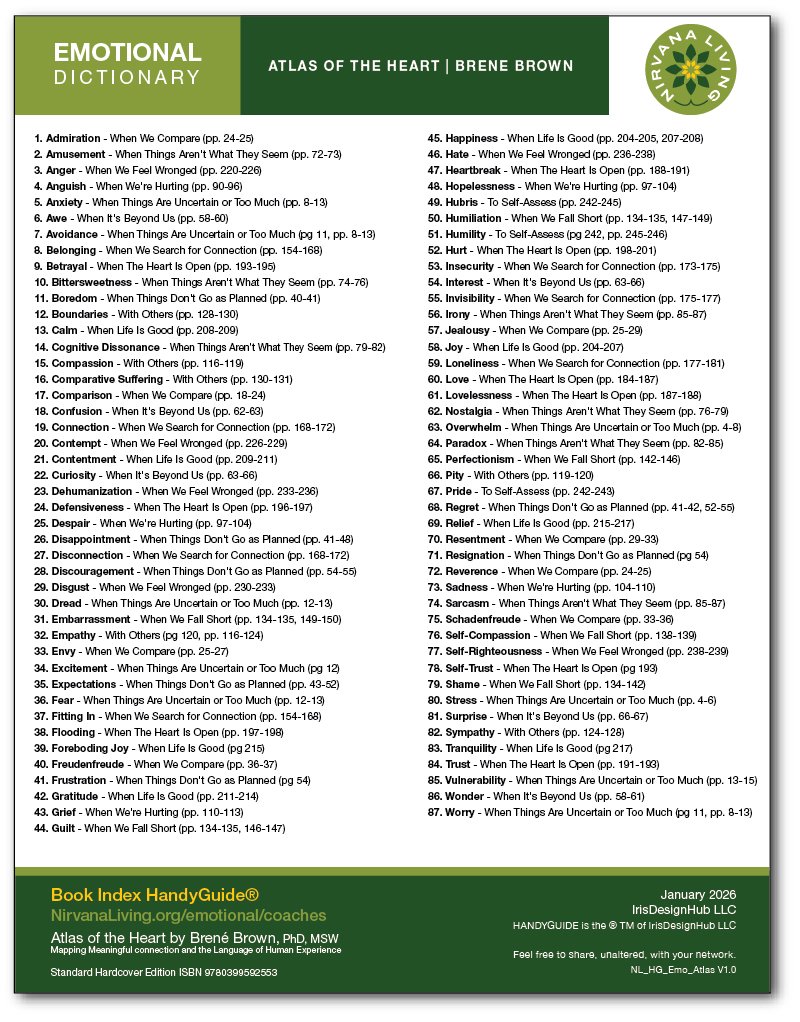
Atlas of the Heart
Mapping Meaningful Connection and the Language of Human Experience
Researcher Brené Brown maps eighty-seven emotions and experiences, offering vocabulary and framework for understanding what we feel. When we can name an emotion, and understand the root, we can work with it more effectively

Understand Emotional Meanings
Chip Conely’s Emotional Equations
Emotional Equations: Simple Steps for Creating Happiness + Success in Business + Life
After personal tragedies, hospitality leader Chip Conley created simple equations to help understand emotional states by focusing on variables we can control rather than constants we can't.
Book
Emotional Equations: Simple Steps for Creating Happiness + Success in Business + Life (Free Press, 2012)
You Tube
Emotional Equations | Chip Conley | Talks at Google
Chip Conley: Emotional Equations | Big Think
Measuring What Makes Life Worthwhile - Chip Conley
A Few Examples
Dealing With Difficult Times
Despair = Suffering – Meaning
Anxiety = Uncertainty x Powerlessness
Defining Who You Are
Authenticity = Self-Awareness x Courage
Integrity = Authenticity x Invisibility x Reliability
Finding Contentment
Happiness = Wanting What You Have / Having What You Want
Joy = Love – Fear
Map Your Experience
Michael Rizk’s Experience Wheel
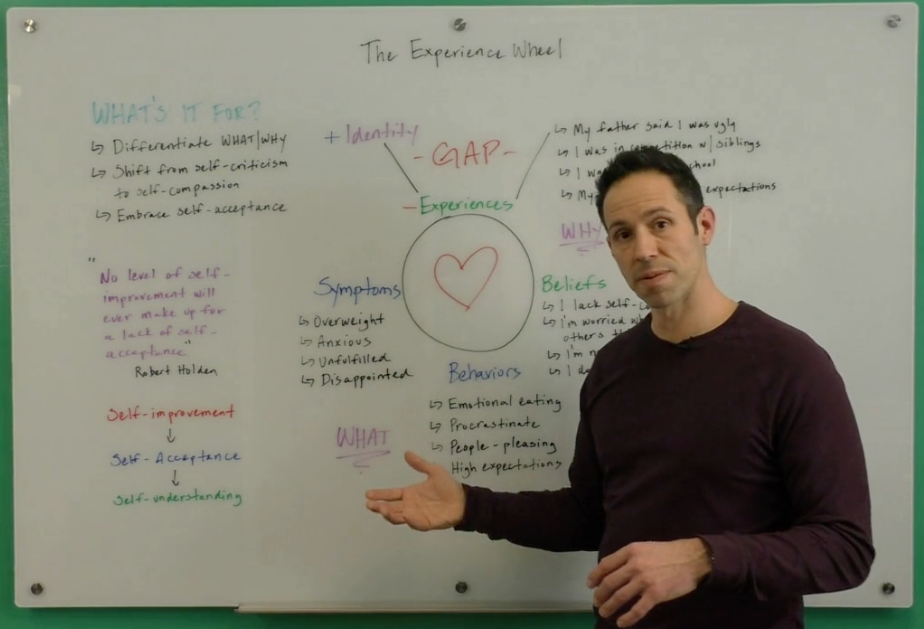
Your painful Experiences create your limiting Beliefs that drive your protective Behaviors that lead to your unwanted Symptoms.
If this Material Seems Overwhelming
Talk therapy failed me for years. Not because my therapist wasn't kind (she was wonderful). But because I couldn't employ any of the techniques while my brain was on fire. For a decade I struggled with anxiety and depression. After talk sessions I remained overwhelmed and frustrated. I was also constantly triggered: sounds, interactions, anything could send my system into fight-or-flight. Multiple adrenaline spikes occurred daily. In that survival state, I couldn't learn. I couldn't heal.
Everything changed when we addressed the underlying neurology. Once my physical function improved, I could finally begin to receive. And only then, after the body & mind felt safer, could my emotional growth begin. It’s because sometimes, some of us, need to properly feed our brain’s biochemistry as well. Check out the Functional Genomics module if this sounds like you.
And while you’re healing you can explore a variety of coaching modalities.
Emotional Coach Highlight
Here’s a guide working at the intersection of emotion and spirit.